

Your first apartment move is easier when you treat it as a small project, not a single hectic day. Before buying boxes or booking a truck, map out your total move-in costs, confirm building rules, and decide which tasks you can handle comfortably.
Ready for a free moving quote? Get a free flat-rate quote online for your first apartment move.
The most useful first apartment moving tips are to build a realistic budget, start utilities early, label and pack a first-night essentials box, coordinate responsibilities with roommates, and compare DIY costs with professional help. Neatly Moving & Storage offers binding flat-rate quotes, so first-time renters can plan around a clearer moving cost instead of guessing.
Small apartments can still involve stairs, elevators, parking limits, and tight scheduling. Full-service packing and unpacking is also available if the process feels overwhelming. Start by looking at the money you will need before move-in, including deposits, supplies, transportation, and an emergency cushion.
How Much Should You Budget for Your First Apartment Move?
Before you commit to a lease, build a realistic picture of what the apartment will cost each month and what the move itself will add. A commonly used starting point is the 30% rent rule: aim for rent that is no more than about 30% of your gross monthly income. It is only a guideline, but it can help you compare apartments without overlooking utilities, transportation, groceries, renter’s insurance, and moving costs.

Plan for move-in costs and an emergency cushion
Your first month may include more than rent. Account for the security deposit, application or administrative fees, utility deposits, furniture, household basics, packing supplies, and the moving service. Write these as separate line items instead of treating them as one large estimate. The Consumer Financial Protection Bureau budgeting worksheet is a useful starting point.
As a practical goal, try to have three months of essential expenses saved before moving, if your circumstances allow. That reserve can help you handle a car repair, temporary income change, or unexpected apartment expense without relying on a credit card. If three months is not realistic yet, set a specific first milestone, such as one month of essentials, and continue building from there.
Make the moving quote part of the budget
Moving estimates can be difficult for first-time renters when the final price changes because of stairs, elevator access, parking, or building requirements. Neatly Moving & Storage offers transparent, binding flat-rate quotes, with relevant access details considered upfront. That cost predictability makes it easier to compare the move with your other move-in expenses. Read these flat-rate moving tips to prepare accurate information for your estimate.
If paying for the move at once would strain your budget, Neatly also offers Sunbit financing through its Move Now, Pay Later option. Review the available terms and make sure any payment fits comfortably within your monthly plan. You can request a virtual moving estimate if you are busy coordinating a lease, work schedule, and move-in date. A clear quote and a written budget let you sign your lease with fewer surprises.
Essential First Apartment Moving Tips: Dos and Don’ts for New Renters
Your first move goes more smoothly when you treat it as both a logistics project and a financial decision. Use these practical dos and don’ts to protect your budget, avoid preventable surprises, and arrive ready to settle in.
Dos for a smoother first move
- Do build a complete monthly budget. List rent, utilities, groceries, transportation, moving costs, deposits, and recurring subscriptions before committing to an apartment. The CFPB budget worksheet is a useful planning tool for a first-time renter.
- Do use the 30% rule as a starting point. Keeping rent near 30% of your gross monthly income can leave more room for utilities, transportation, savings, and unexpected expenses. It is a guideline, not a guarantee, so adjust it for your actual income, debts, and local housing costs.
- Do keep emergency savings separate. Moving can reveal costs you did not anticipate, such as replacement keys, a broken appliance, or a required delivery fee. Preserve a cash cushion instead of using every dollar for furnishings or decor.
- Do confirm the moving logistics early. Ask the property manager about elevator reservations, parking, loading zones, stairs, certificates of insurance, and move-in hours. Share those requirements with your local moving services provider so the plan and quote reflect the building.
Don’ts that create avoidable problems
- Don’t skip the lease review. Read the lease before signing, including fees, utility responsibilities, renter requirements, guest rules, move-in procedures, and notice terms. Ask questions in writing when anything is unclear.
- Don’t choose a mover on price alone. A low initial number may not explain what is included. Look for clear communication and a detailed, binding flat-rate quote when available, especially if you are working with a first-apartment budget.
A realistic budget and an early conversation with your building manager can prevent most first-move surprises. Make decisions from the full cost and logistics, not from the rent or moving estimate in isolation.
What Should Be on Your First Apartment Moving Checklist?
A smooth first apartment move is mostly a matter of confirming small details before they become moving-day problems. Work through this checklist in order, then keep the confirmations, access instructions, and important contact information together on your phone.
-
Confirm your move-in date and building requirements. Ask the property manager when you can access the apartment, where movers should check in, and whether the building requires a certificate of insurance or special approval. Confirm the loading entrance, service elevator, stairs, and any time restrictions. Apartment moves often involve parking rules, elevator reservations, and building-specific logistics, so clarify these details before scheduling the crew. Browse these apartment moving tips in Los Angeles for guidance.
-
Reserve the elevator and moving-day parking. If your building has a service elevator, reserve it for the complete delivery window and ask whether a refundable deposit is required. Identify the legal place for the moving truck to stop, and find out whether you need a parking permit or curb reservation. Send these instructions to everyone helping with the move.
-
Set up utilities and verify the start dates. Arrange electricity, gas, water, internet, and any other services your lease requires. Do not rely only on an order confirmation. Check that each account is scheduled to begin on or before move-in day, and save the confirmation numbers.
-
Update your address and protect your belongings. Submit an address change through the USPS mail forwarding service, then update your address with your bank, employer, subscriptions, insurance providers, and government accounts. Purchase renters insurance and moving coverage before receiving the keys if your lease requires it. Keep the policy details available, and ask whether your coverage applies during the move.
-
Pack a first-night essentials box. Put toilet paper, soap, medications, chargers, a change of clothes, basic toiletries, towels, snacks, water, paper goods, and simple cleaning supplies in one clearly marked container. Include a small tool kit and any documents you may need at check-in. Keep this box with you rather than burying it in the moving truck. For items going into storage, use these packing tips for your first apartment storage.
-
Complete a move-in inspection before unpacking. Photograph floors, walls, appliances, windows, fixtures, and existing damage as soon as you receive access. Submit the inspection form by the deadline in your lease, and save a copy. This quick record helps distinguish pre-existing conditions from damage that occurs after move-in.
Need help with your first move? Request a free flat-rate quote online and let Neatly handle the heavy lifting.
With utilities confirmed, access arranged, and essentials within reach, you can spend move-in day getting settled instead of solving preventable logistics.
Should You Move Your First Apartment Yourself or Hire Professional Movers?
For a small first apartment, a DIY move can look less expensive at first. That choice becomes harder when you account for truck rental, fuel, packing supplies, friends’ schedules, stairs, elevator reservations, parking, and the physical work of carrying everything. The right option depends on your inventory, building access, available help, and how much uncertainty you can manage.
| Consideration | DIY move | Professional move with Neatly |
|---|---|---|
| Upfront cost | You may pay for a truck, mileage, fuel, equipment, supplies, and meals or favors for helpers. The total can change as the day unfolds. | Neatly provides transparent, binding flat-rate quotes, giving first-time renters clearer cost expectations before moving day. |
| Time and stress | You coordinate the truck, helpers, packing, loading, driving, unloading, and cleanup. A delay or a helper cancellation can affect the entire schedule. | A professional crew manages the physical move. If packing feels overwhelming, Neatly also offers full-service packing and unpacking, so you can focus on settling into the apartment. |
| Apartment logistics | You are responsible for checking truck clearance, reserving an elevator, arranging parking, and following building rules. Stairs can add significant effort. | Stairs, elevator access, and building requirements can be reviewed when the quote is prepared. Discuss these details early so the estimate reflects the real logistics. |
| Budget flexibility | DIY may work when you have reliable help, few belongings, and plenty of time. It is less appealing when unexpected costs would strain your move-in budget. | Sunbit financing, described as Move Now, Pay Later, may provide added payment flexibility for eligible customers. Review the terms and choose an option that fits your budget. |
When DIY makes sense
DIY can be practical for a lightly furnished studio, a short distance, easy ground-level access, and a small group of dependable helpers. Confirm the truck size, parking plan, elevator rules, and move-in window before committing. A written checklist helps prevent a low-cost plan from becoming a rushed one.
When professional help is worth it
Hire professionals when you have heavy furniture, stairs, limited parking, a tight schedule, or no dependable help. Start with our main moving tips guide for a broader overview, then request a quote that accounts for your building access.
How Do You Coordinate a Move With Roommates?
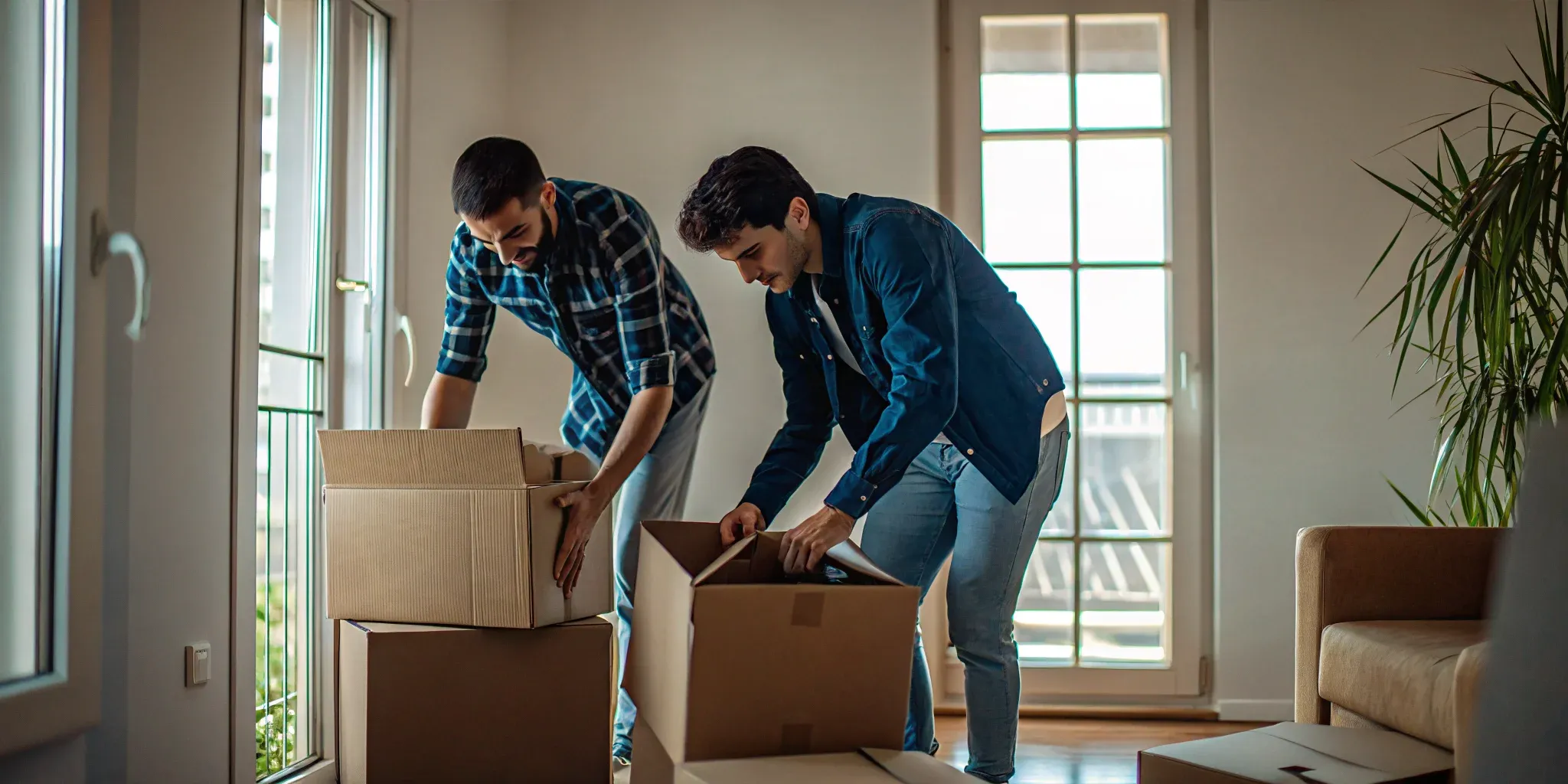
Sharing a first apartment can make moving more affordable, but unclear expectations can create tension before anyone has unpacked. Agree on the money, the inventory, and the moving-day jobs in writing so everyone knows what they are responsible for.
Set the budget before you buy or book anything
Start with a shared list of move-in costs: the security deposit, first month’s rent, application or administrative fees, utility deposits, cleaning supplies, furniture, and transportation. Decide which expenses are split evenly and which belong to the person using or choosing the item. For example, three roommates might divide a basic kitchen setup equally, while one roommate pays for a larger bedroom dresser they will keep.
Use one shared spreadsheet or budgeting app to record the amount, the person who paid, each roommate’s share, and the repayment deadline. Set a spending limit for shared purchases, and agree that anything above it needs everyone’s approval. This prevents one person from choosing premium items while expecting the group to cover the cost.
Track what is arriving and where it belongs
Create an inventory with each roommate’s name, a short description of the item. And its destination room along with whether it is coming in a personal vehicle, delivery truck, or moving van. Label boxes with both the owner’s name and the room. A simple color system, such as blue for one roommate and green for another, makes it easier to place boxes quickly.
Keep shared items in a separate section of the inventory. Include essentials such as cookware, a vacuum, bathroom supplies, and basic tools. Photograph valuable items before loading them, and save receipts for shared purchases in the same folder as the inventory.
Assign moving-day jobs and communication checkpoints
Divide practical tasks rather than assuming everyone will help with everything. One person can confirm elevator access and parking, another can meet the movers or truck, and another can check the apartment condition and direct boxes. Choose a group text for immediate updates and a shared document for decisions, costs, and the final inventory.
Schedule a brief check-in the night before and another after the last box is inside. If plans change, update the group before spending money or changing a reservation. Clear communication is one of the most useful first apartment moving tips because it protects both the budget and the roommate relationship.
Frequently Asked Questions About Moving Into Your First Apartment
What is the 30% rule for apartments?
The 30% rule suggests spending no more than roughly 30% of your gross monthly income on rent. It is a broad guideline that can help first-time renters compare apartments, but your actual limit depends on your income, debt, and other living costs. Use it as a starting point and adjust based on your full budget.
How much should I save before moving into my first apartment?
A common recommendation is to have enough to cover three months of essential expenses, including rent, utilities, groceries, and transportation. That reserve can help you manage unexpected costs such as a car repair or temporary income change. If three months is not realistic yet, start with one month and build from there.
Should I hire movers or move my first apartment myself?
DIY moving works well for a lightly furnished studio with easy ground-level access and dependable help. Professional movers can be a better choice when you have stairs, heavy furniture, limited parking, or a tight schedule. Neatly Moving & Storage offers binding flat-rate quotes so you know the cost before moving day.
How do I set up utilities for my first apartment?
Contact the electric, gas, water, and internet providers as soon as you have a signed lease and a start date. Schedule activation for the day before or the day of move-in to avoid a gap. Ask the landlord or property manager which utility providers serve the building and whether any accounts are already active in your unit.
What should I pack first when moving into a first apartment?
Pack a separate first-night essentials box with bedding, a change of clothes, basic toiletries. Phone chargers, basic tools, medications, and any items you will need within the first 12 hours. Label it clearly and transport it yourself or ask the movers to keep it accessible so you do not have to search through boxes after a long day.
How do I handle moving with roommates in a first apartment?
Start with a shared budget, an inventory of whose items go where, and a list of moving-day jobs assigned to each person. Use a group text for real-time updates and a shared document for decisions and costs. Agree on spending limits for shared purchases and schedule a brief check-in before and after moving day.
Ready to Plan Your First Apartment Move?
A clear plan can make your first move easier to budget and coordinate, especially when you are comparing DIY logistics with professional help. Neatly Moving & Storage can explain your options and provide transparent flat-rate pricing for your move. Contact Neatly Moving online to get a free flat-rate moving quote and take the next step with a plan that fits your needs.


