

A piano can weigh hundreds of pounds, yet one narrow turn can stop the entire move. Safe handling starts before anyone lifts a corner. The route, equipment, and crew matter as much as strength.
Contact Neatly Moving & Storage to request a transparent estimate and plan a safer piano move.
How to move a piano safely depends on its type, weight, route, and the equipment available. Measure every doorway, hallway, turn, stair, and truck ramp before lifting; then secure the keyboard lid, pad the finish, and protect nearby floors. Use a piano board or heavy-duty dolly with straps during each step, never the piano’s small casters or fragile legs. Uprights need a coordinated crew, while grands usually need trained movers to remove the legs and pedals before placing the body on a piano board. Because safe lifting and carrying techniques help prevent injury, hire professionals for heavy acoustic pianos, grands, tight spaces, stairs, or any route you cannot fully control.
The right method changes with piano type, stairs, distance, and the value of the instrument. Before choosing a DIY move or requesting a transparent professional estimate, learn why How to move a piano safely starts with a route plan. The path begins with careful measurements.
How to move a piano safely starts with a route plan
A safe piano move starts before anyone touches the instrument. Its great weight, uneven balance, delicate finish, and awkward shape can turn a tight corner into a serious hazard. Safe lifting and carrying methods also help reduce injury risk, as noted in Cal Poly’s musician health guidance.
Know the piano before lifting
First, confirm the piano type, make, model, weight, height, width, and depth. Upright pianos commonly weigh between 300 and 800 pounds, while some grand pianos can reach 1,400 pounds. These ranges show why a guess based on size alone is unsafe, according to this piano moving guide.
An upright carries most of its weight in a tall cabinet, so it may tip if the crew loses control. A grand has a wide body, a heavy frame, and long legs that are not safe lifting points. Its shape often calls for trained handling and gear made for the task.
Mark the weak points
Inspect the piano before planning each hand position. Note loose legs, pedals, casters, hinges, lid parts, handles, and trim. Never assume a decorative part can hold the piano’s weight. Photograph any existing marks so the crew can track the instrument’s condition.
- Treat legs, pedals, casters, and the music rack as fragile parts.
- Keep hands away from keys, hinges, and moving lid sections.
- Plan support around the strong cabinet or frame, not attached trim.
- Flag worn flooring, loose railings, and other weak points on the route.
Small wheels under a piano are meant for slight position changes, not a full move. Rolling them across a room can harm the floor or make the piano unstable. Review common piano moving mistakes before deciding whether the route and crew are ready.
Measure the full route
Measure the piano and every doorway, hall, turn, stair landing, elevator, and truck opening along the route. Check both width and height, then allow room for padding, moving gear, and the crew’s hands. A doorway that barely matches the piano is not a workable opening.
Walk the route in order and remove rugs, cords, boxes, and low furniture. Mark steep slopes, narrow turns, low ceilings, and places where footing may change. Choose a clear rest point before each hard turn or stair section. If any point lacks safe clearance or control, stop and call a piano moving professional.
What equipment do you need to move a piano?
Learning how to move a piano starts with gear made for a heavy, delicate load. Do not rely on the piano’s small casters. Gather and inspect every item before anyone lifts the instrument. Match each dolly, strap, board, and ramp to the piano type, weight, and planned route.
Core moving equipment
A four-wheel piano dolly carries an upright piano across flat, clear paths. Use rated moving straps to keep the load controlled and secured to the dolly. Thick moving blankets protect the finish, while stretch wrap or tape holds those blankets in place.
- Piano dolly: Supports the instrument during movement across level ground.
- Moving straps: Help the crew control and secure the piano.
- Moving blankets: Cushion the case against scrapes and bumps.
- Stretch wrap and tape: Secure blankets without placing tape on the piano finish.
- Loading ramp: Creates a stable path into the moving truck.
- Piano skid board: Supports a grand piano after its legs and pedals are removed.
Check each dolly, strap, ramp, and skid board rating against the piano’s needs. A ramp should be stable, secured, and wide enough for safe movement. Review these professional piano moving tips while planning the route and loading process.
Protection for people and property
Wear grip gloves and closed-toe shoes that provide firm footing. Gloves can improve grip, but they do not replace safe lifting habits. Cal Poly’s musician health guidance also stresses safe lifting and carrying techniques.
Lay floor runners, hardboard panels, or another suitable cover along the full route. Protect door frames, corners, stairs, and thresholds before moving begins. Keep extra blankets and tape nearby so the crew can fix loose padding at once.
Upright and grand piano preparation
The right setup depends on the piano type. Uprights usually remain assembled and travel upright on a dolly. Grand pianos need special preparation, including a fitted skid board and careful removal of supported parts.
| Preparation item | Upright piano | Grand piano |
|---|---|---|
| Primary support | Rated piano dolly | Fitted piano skid board |
| Before wrapping | Secure keyboard lid and top | Secure lid and protect the case |
| Removable parts | Usually none | Legs, pedal lyre, and music desk |
| Padding focus | Corners, keys, and finish | Case, lid, legs, and hardware |
| Transport position | Upright and firmly strapped | Secured on its skid board |
Label every removed grand piano part and place its hardware in a sealed bag. Do not start taking it apart without the right tools and a clear setup plan. If the route includes stairs or tight turns, trained piano movers should assess it first.
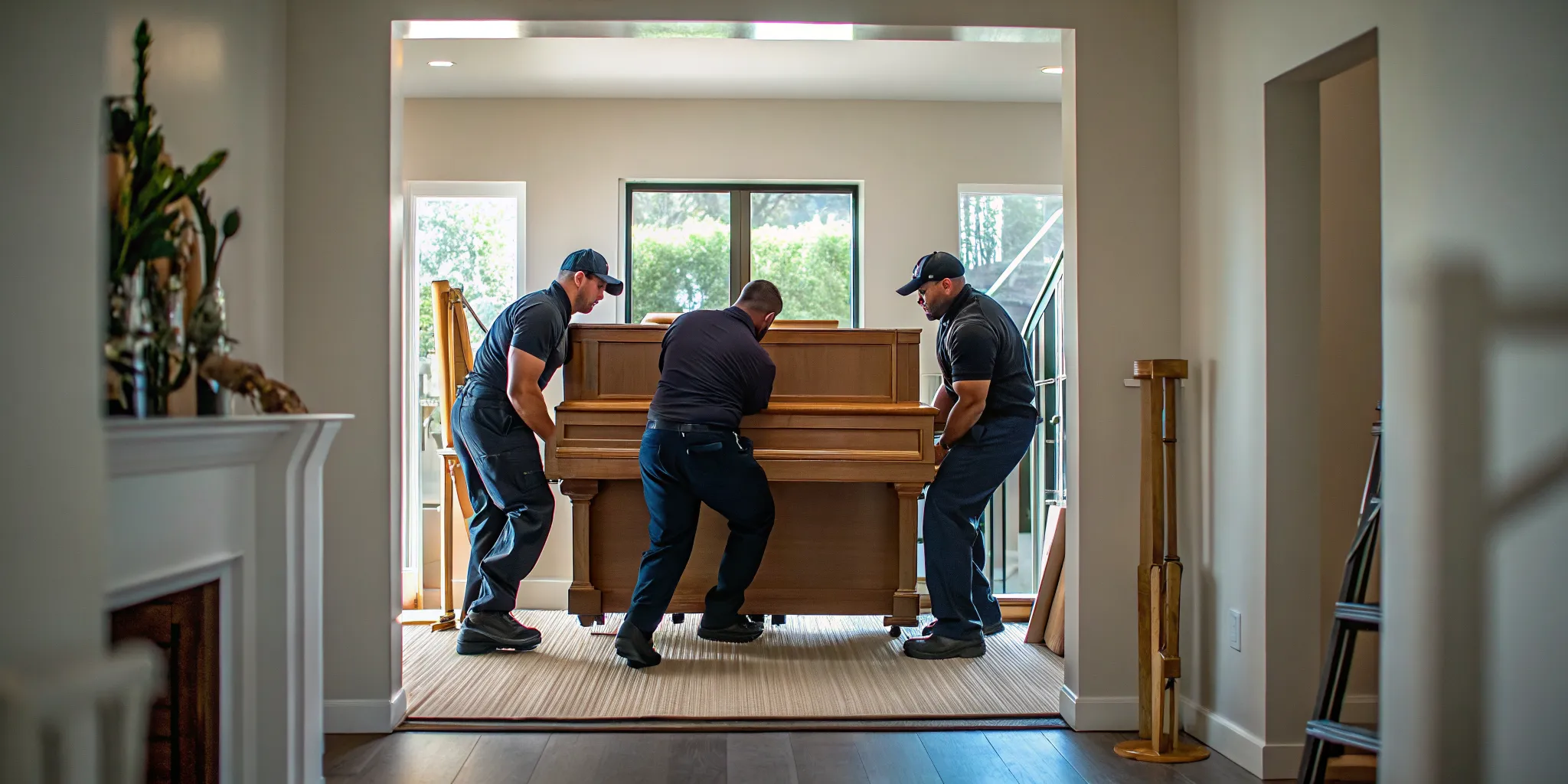
How to move an upright piano step by step
Moving an upright piano safely takes a planned route, the right gear, and a team that follows one leader. This sequence covers a level path from its room to a waiting truck. If the route includes stairs, sharp slopes, or tight turns, stop and hire trained movers.
Prepare the route and team
Measure the piano, doorways, halls, and truck opening before lifting anything. Clear rugs, cords, boxes, pets, and people from the full route. Protect floors and door frames, then park the truck so the loading ramp stays straight and stable.
Use a piano dolly rated for the load, moving blankets, stretch wrap, tape, and strong straps. Each helper should wear closed-toe shoes and suitable gloves. The OSHA overview of personal protective equipment explains why proper gear matters when hazards cannot be removed.
The upright piano moving sequence
- Assign roles and review the route. Choose one person to call each lift, stop, and turn. Place helpers at both ends, with another person ready to guide the path.
- Secure the moving parts. Close and lock the keyboard lid when possible. Pad it before using tape or wrap, so adhesive never touches the piano’s finish.
- Wrap the cabinet. Cover the front, back, sides, and corners with moving blankets. Secure the padding snugly without placing pressure on pedals, legs, or decorative trim.
- Lift the piano onto the dolly. Keep the upright piano vertical while the team lifts together from solid cabinet points. Use proper lifting form, since Cal Poly notes the value of safe lifting and carrying techniques.
- Strap the piano to the dolly. Center its weight, then secure the cabinet with rated straps. Test for movement before anyone starts pushing.
- Guide it across the level route. Move slowly, keep hands away from pinch points, and stop before each doorway or turn. Never roll the piano on its decorative casters; they are not transport wheels.
- Load and secure it in the truck. Push the dolly straight up the ramp while helpers control both sides. Inside, keep the piano upright against a secure wall and strap it to the truck’s tie-down points.
Control every movement
No one should pull alone, stand below the piano on the ramp, or rush to correct a lean. Stop, reset the team’s grip, and confirm the next move out loud. If the piano feels unstable at any point, lower it carefully and reassess the plan.
A trained crew can manage the weight, truck loading, and secure transport when the route or instrument creates added risk. Review Neatly’s professional piano moving tips while planning the rest of the move.
How is moving a grand piano different?
A grand piano cannot be moved upright like a typical cabinet piano. Its wide body, long legs, and pedal assembly need a planned disassembly process. The main case must then rest on a piano board, also called a skid board, for support.
Preparing and labeling the parts
Preparation starts by closing and securing the keyboard cover and top lid. Movers wrap the body before removing parts, which helps protect the finish as hands and tools move around it. Before any lifting begins, the crew clears the full path and assigns each person a role.
The legs and pedal assembly are removed one at a time while the piano body stays supported. Each part should receive a clear label that shows its position, such as front left or rear. Keep matching bolts, screws, and fittings in labeled bags so nothing gets mixed up during setup.
- Wrap each removed leg and the pedal assembly on its own.
- Pad corners and other points that could rub against the body.
- Keep hardware with its matching part in a sealed, labeled bag.
Using a piano board
Once the needed parts are off, the crew carefully tips the wrapped body onto its long side. They place it on a padded piano board and secure it with heavy straps. The board supports the case and gives movers safer grip points for loading and tight turns.
This stage calls for a coordinated team, not one person pulling while others react. Cal Poly advises using safe lifting and carrying techniques to help avoid injuries. Movers should call each lift, turn, and stop before anyone changes position.
Blankets protect the finish, but they cannot replace a correctly fitted board and straps. The crew should check that straps are snug without pressing on delicate parts. Wrapped legs, pedals, and hardware travel apart from the main case so they cannot strike it.
Neatly Moving & Storage moves upright, baby grand, and full grand pianos with specialized equipment as part of its professional local moving services.
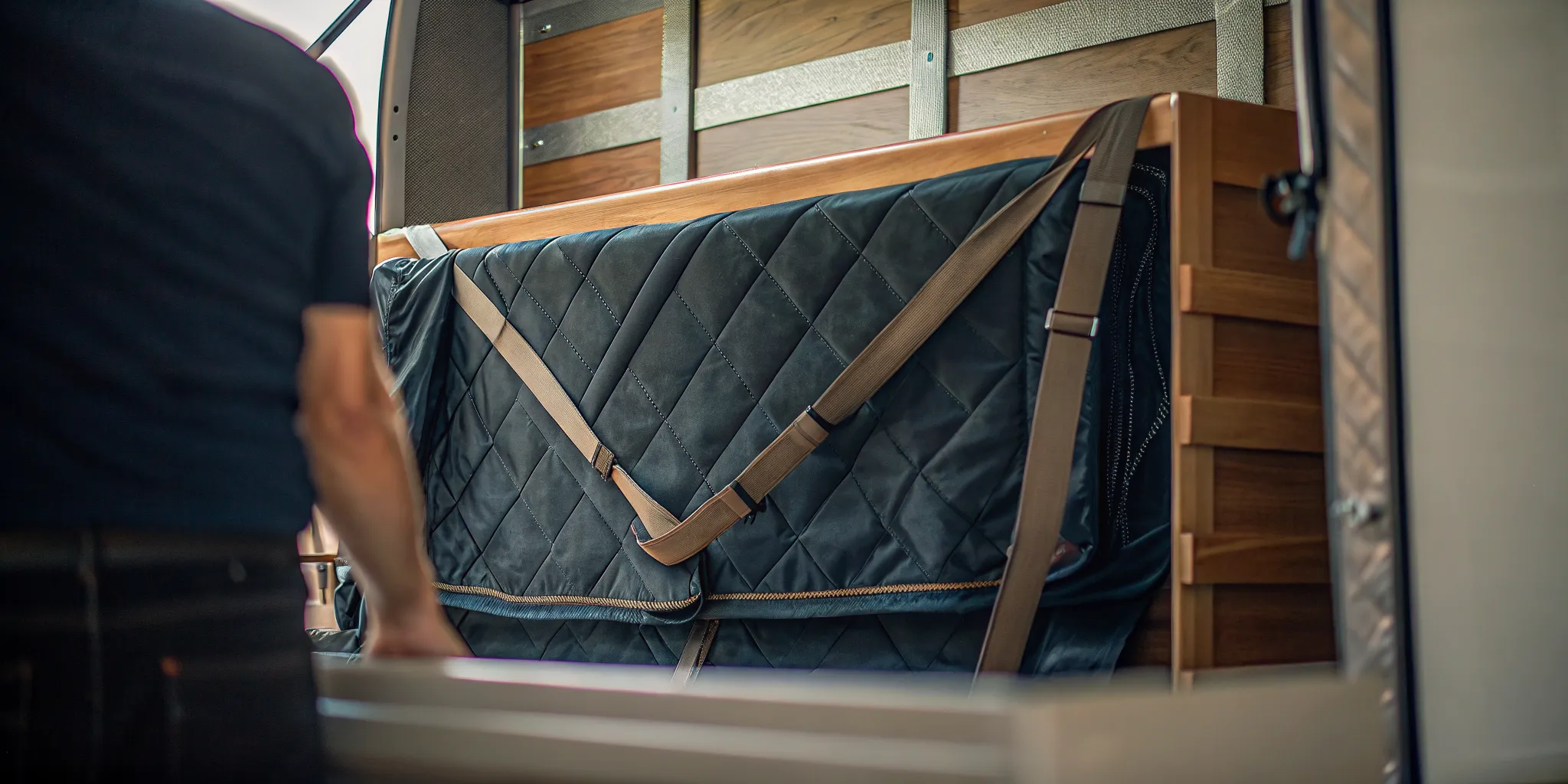
Why grand piano moves need professionals
Grand piano moves are generally professional jobs because one mistake can harm the instrument, the property, or the people carrying it. Doorways, stairs, slopes, and truck height all change the plan. Trained movers also bring the right board, straps, padding, and enough crew members.
If you are learning how to move a piano, start by judging the route rather than the instrument alone. Review common piano moving mistakes before deciding whether the path and equipment are suitable. A professional crew can plan disassembly, protect each part, and manage the move as one controlled process.
Can you move a piano on stairs or through tight spaces?
Yes, but stairs and tight spaces can turn a controlled piano move into a high-risk job. Before lifting anything, measure the full route and clear every obstacle. Check each doorway, turn, landing, threshold, ramp, and elevator so the crew knows what lies ahead.
Moving a piano on stairs
Stairs require a steady team, the right gear, and one person directing each move. The lead should call simple commands such as “lift,” “stop,” and “lower.” Everyone must hear and follow the same command before anyone changes position.
- Clear the stairs, landings, and nearby doors before the move starts.
- Confirm that the piano, padded board, and crew can fit at every turn.
- Keep the route closed to children, pets, and anyone outside the moving team.
- Stop at a stable landing if the crew needs to reset its grip or position.
Never let the piano’s weight pull a helper down the stairs. A person who slips, loses grip, or cannot see the next step should call for an immediate stop. Proper lifting and carrying techniques matter during demanding moves, especially when balance and footing can change fast.
Tight turns, elevators, and ramps
Measure the piano at its widest and tallest points, including any protective padding or moving board. Then compare those measurements with door frames, elevator openings, ceilings, and tight corners. A piano that clears a doorway may still fail to make the turn beyond it.
- Reserve the elevator and confirm its door stays open long enough for a controlled entry.
- Check ramps for firm placement, a clear path, and enough space for the full crew.
- Cover raised thresholds so wheels do not catch during a slow, planned crossing.
- Remove doors only when the crew knows how to reinstall them safely.
Walk the route in both directions before moving the piano. Assign one spotter to watch the instrument, nearby walls, and each helper’s footing. If the crew cannot keep the piano stable through a turn, back out slowly and reassess the plan.
When to stop a DIY attempt
Stop if the route is too narrow, the landing is too small, or the team cannot agree on a safe movement plan. Also stop when a ramp shifts, a strap loosens, or any helper feels unsure. Do not improvise once the piano is on stairs or partly through a tight opening.
Professional help is the safer choice when the move needs special gear, disassembly, or complex stair work. Neatly’s professional piano moving tips can help you plan the wider move. A trained moving crew can also inspect the route before deciding how to move a piano through the space.
How much does it cost to move a piano?
There is no single price for moving a piano. The final cost depends on the instrument, travel distance, and the path between its current spot and destination. A detailed estimate should account for that full route carefully before work starts.
Piano type and handling needs
An upright piano and a grand piano call for different plans, crews, and gear. A grand may need careful disassembly before it can be placed on a piano board. Digital models can also need cabinet parts removed and packed for the trip.
Disassembly, padding, wrapping, and reassembly all affect the work involved. Larger or more delicate instruments may need added crew support and special gear. The quote should reflect those needs rather than treat every piano as a standard household item.
Distance, access, and storage
Stairs, narrow halls, tight turns, elevators, and long carries can add time and labor. Crews may also need more protection for floors, walls, doors, and the piano itself. Because proper safe lifting and carrying techniques matter, a low quote should not come from skipping needed crew members or gear.
Travel distance also shapes the plan. A nearby move and a long-distance move involve different drive times, schedules, and transport needs. Parking limits or a long walk from the truck can also affect loading at either address.
If the new space is not ready, storage can become part of the total cost. Ask how the piano will be protected, moved into storage, and delivered later. Neatly’s storage solutions can help when move-out and move-in dates do not match.
What a clear estimate should cover
A useful estimate begins with accurate details, not a guess based only on mileage. Share the piano type, pickup and delivery addresses, stair count, elevator access, doorway widths, parking limits, and storage needs. Photos or a virtual walk-through can help the mover spot access issues before move day.
Ask whether the estimate covers the crew, protective materials, special gear, disassembly, reassembly, transport, and planned storage. Also ask what could change the quoted price. Clear terms make it easier to compare options and set a sound moving budget.
Before requesting an estimate, add piano moving to your checklist and gather the key access details. Neatly uses transparent, flat-rate pricing to show the planned cost before the move. That approach helps you plan without relying on an unverified online price range.
When should you hire professional piano movers?
A DIY move may suit a portable digital piano that comes apart as its maker directs. An acoustic piano calls for a much stricter risk check. Piano moving combines heavy lifting with a delicate instrument, tight paths, and shifting weight. Cal Poly includes safe lifting and carrying techniques in its guidance on health risks for musicians.
Clear stop signs
Hire professional piano movers if the route includes stairs, sharp turns, narrow doors, slopes, or an elevator with limited space. Stop the DIY plan if you lack a piano board, rated straps, thick pads, or enough capable helpers. A grand piano also needs skilled handling because parts may need removal before transport.
The piano’s value matters, but so do the floors, walls, door frames, and people along the route. One poor lift can create several problems at once. Review these common piano moving mistakes before deciding whether your team and gear fit the job.
- Choose professionals when no one in your group has moved a piano before.
- Choose professionals when the piano must be tilted, taken apart, or moved over steps.
- Choose professionals when the truck lacks a sound ramp and secure tie-down points.
- Pause the move if weather or access conditions make the planned route unsafe.
What to share for an accurate quote
A useful quote starts with clear details, not just a pickup and drop-off address. Tell the mover whether the piano is upright, baby grand, grand, or digital. Share its make, model, size, and known weight when available. Photos can help show the piano and each hard part of the route.
Count the steps and landings at both locations. Measure doors, halls, turns, and elevator openings, then note parking limits and the distance to the truck. Add the piano move when you add piano moving to your checklist, so access details do not get missed.
- Pickup and delivery addresses, dates, and preferred time windows
- Piano type, size, make, model, and photos
- Step counts, stair shape, tight turns, and elevator details
- Doorway and hallway measurements at both locations
- Parking rules, loading access, and long-carry distance
- Any loose, damaged, or sensitive parts already present
Choosing a professional mover
Ask each mover to explain the crew plan, protection materials, equipment, and transport method. Also ask what the quote includes and which access changes could affect it. Clear answers make quotes easier to compare and help prevent surprises on moving day.
Neatly Moving & Storage handles specialty items, including pianos, with trained employee crews across Southern California. Its flat-rate approach gives customers a clear price based on the details shared before the move. Final scope still depends on the piano, route, distance, access, and services requested.
Frequently Asked Questions
These quick answers cover the questions people ask most often about piano moving costs, DIY safety, stairs, equipment, and transport position. The safest method always depends on the instrument and route. For more planning guidance, review Neatly’s moving FAQs or ask a professional to assess the move.
How much does it cost to move a piano?
Piano moving costs depend on the instrument’s type and size, travel distance, stairs, tight turns, and required disassembly. These factors can change the crew size, equipment, and time needed. Request a detailed estimate that identifies access challenges and explains what the quoted rate includes. For a Southern California move, Neatly provides transparent, flat-rate estimates before service.
Can you move a piano by yourself?
Moving a piano alone is not recommended because one person cannot safely control its weight and balance. According to Budget Truck Rental, upright pianos generally weigh 300 to 800 pounds. A safe move requires enough trained helpers, a planned route, protective padding, proper lifting equipment, and secure transportation. Hire professionals when the route includes stairs, tight spaces, or a grand piano.
How do you move a piano up and down stairs?
Moving a piano on stairs requires a trained crew, a piano board or skid, heavy-duty straps, padding, and a controlled route. Movers secure the piano before guiding it one step at a time while keeping its weight balanced. Because stairs create a serious tipping and injury risk, this is not a suitable DIY task. Professionals should assess stair width, turns, railings, and landings first.
What equipment do I need to move a piano?
A piano move typically requires a piano board or skid, heavy-duty straps, moving blankets, protective wrap, and a suitable dolly. Ramps and secure truck tie-downs may also be necessary. The exact equipment depends on the piano type and route. Grand pianos need specialized handling because their legs and pedals are usually removed before the body is secured to a piano board.
Is it safe to move a piano on its side?
It depends on the piano type and the method used. Upright pianos should generally remain upright during transport. Grand pianos are commonly placed on their side after trained movers remove the legs and pedals and secure the body to a piano board. Millers Music notes that moving a grand this way requires expert handling. Do not tip an acoustic piano without proper equipment.
Ready to Plan a Safer Southern California Piano Move?
Delaying your piano moving plan can leave too little time to address stairs, narrow turns, parking, and building access safely. Waiting until your move is close may also limit scheduling options and force important choices when you are already busy. Starting now gives you time to share measurements, confirm the route, prepare each space, and choose a moving date with confidence.
A clear plan reduces last-minute pressure and gives your crew the details needed to prepare for your piano and property. Contacting the team early also leaves time to answer practical questions. Ready to plan your move? Request a transparent moving estimate to discuss your piano, locations, timeline, and access needs with Neatly Moving & Storage.


