

A refrigerator can weigh hundreds of pounds, but its weight is only one part of the risk. Water lines, gas connections, delicate controls, narrow turns, and unprotected floors can turn a rushed appliance move into an injury or expensive repair. Knowing how to move large appliances means preparing every connection, loose part, and step of the route before anyone lifts.
Get a free moving estimate for your appliance move
To move a large appliance safely, first review its manual, shut off the correct utilities, and arrange a qualified technician for gas or hardwired connections. Empty and clean the appliance, remove or secure loose parts, measure the full route, protect floors, and use an appliance dolly with rated straps. Keep refrigerators and most major appliances upright during transport, then follow the manufacturer instructions before reconnecting them.
This guide explains the process for refrigerators, washers, dryers, dishwashers, and ranges. If a shutoff is hard to reach, a connection is damaged, or you are unsure how it works, stop and call a qualified technician.
How to move large appliances safely
A successful appliance move combines safe utility work with careful handling. Do not treat a refrigerator or washer like a large box. It has moving parts, utility lines, delicate controls, and a high center of gravity.
1. Read the manual and plan ahead
Find the owner manual for each appliance. Check its approved moving position, disconnection steps, transit-bolt requirements, and restart instructions. If you cannot find the printed manual, search the manufacturer’s website using the model number.
Schedule a qualified technician in advance when the appliance uses gas, is hardwired, or has a connection you cannot safely identify. Movers can handle prepared appliances, but utility work may require a licensed trade professional.
2. Gather the right moving equipment
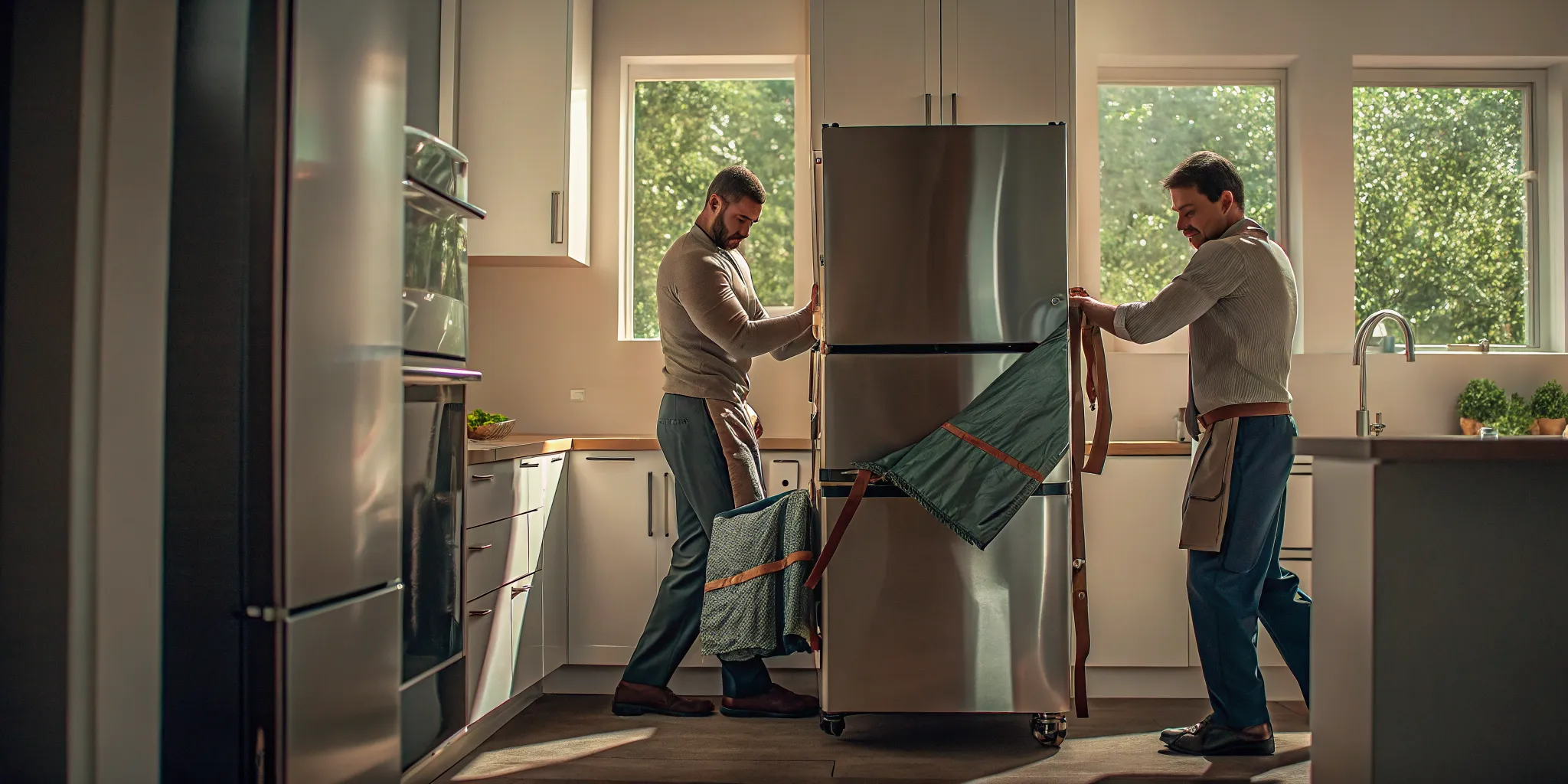
Use an appliance dolly rated for the appliance’s weight, strong straps, moving blankets, tape, zip bags, floor protection, gloves, and sturdy closed-toe shoes. Do not rely on a small hand truck or improvised rope. The load must remain stable from the room to the truck.
- Measure the appliance at its widest, tallest, and deepest points.
- Measure doors, halls, turns, stairs, elevators, and truck openings.
- Remove doors from hinges only when needed and safe.
- Protect floors, walls, corners, and railings before moving begins.
3. Shut off, empty, and secure
Turn off power, water, or gas as directed by the manufacturer and the appropriate professional. Empty every appliance and remove loose shelves, racks, trays, and hoses. Clean and dry the interior so moisture, odors, and mildew do not develop in transit.
Bag and label small parts for each appliance. Secure cords and approved disconnected hoses to the unit without pinching them. Close doors with straps or moving wrap, but avoid adhesive directly on a finished surface.
4. Move slowly with a clear team plan
Assign one person to direct the move. Tilt only as much as needed to load the appliance dolly, then strap the unit firmly. Keep people away from the downhill side on ramps and stairs. If the load feels unstable, lower it safely and revise the plan.
Never drag an appliance across an unprotected floor. Never use its handle, door, cord, or utility line as a lifting point. A route with tight turns, many steps, or steep grades is a strong reason to hire experienced movers.
How should you prepare a refrigerator for moving?
A refrigerator needs extra lead time because food, ice, water lines, shelves, and compressor components all require attention. Start early enough for the freezer to defrost and the interior to dry fully.
Empty, defrost, and dry the refrigerator
Use, donate, or pack chilled food in coolers. Remove ice and turn off the appliance according to its manual. Let the freezer defrost, collect water with towels or trays, and clean every surface. Leaving moisture inside can cause odors or mildew.
If the refrigerator has an ice maker or water dispenser, shut off its water supply before disconnecting the line. If the valve is stuck, leaking, or unclear, call a plumber or appliance technician rather than forcing it.
Secure shelves, doors, and cords
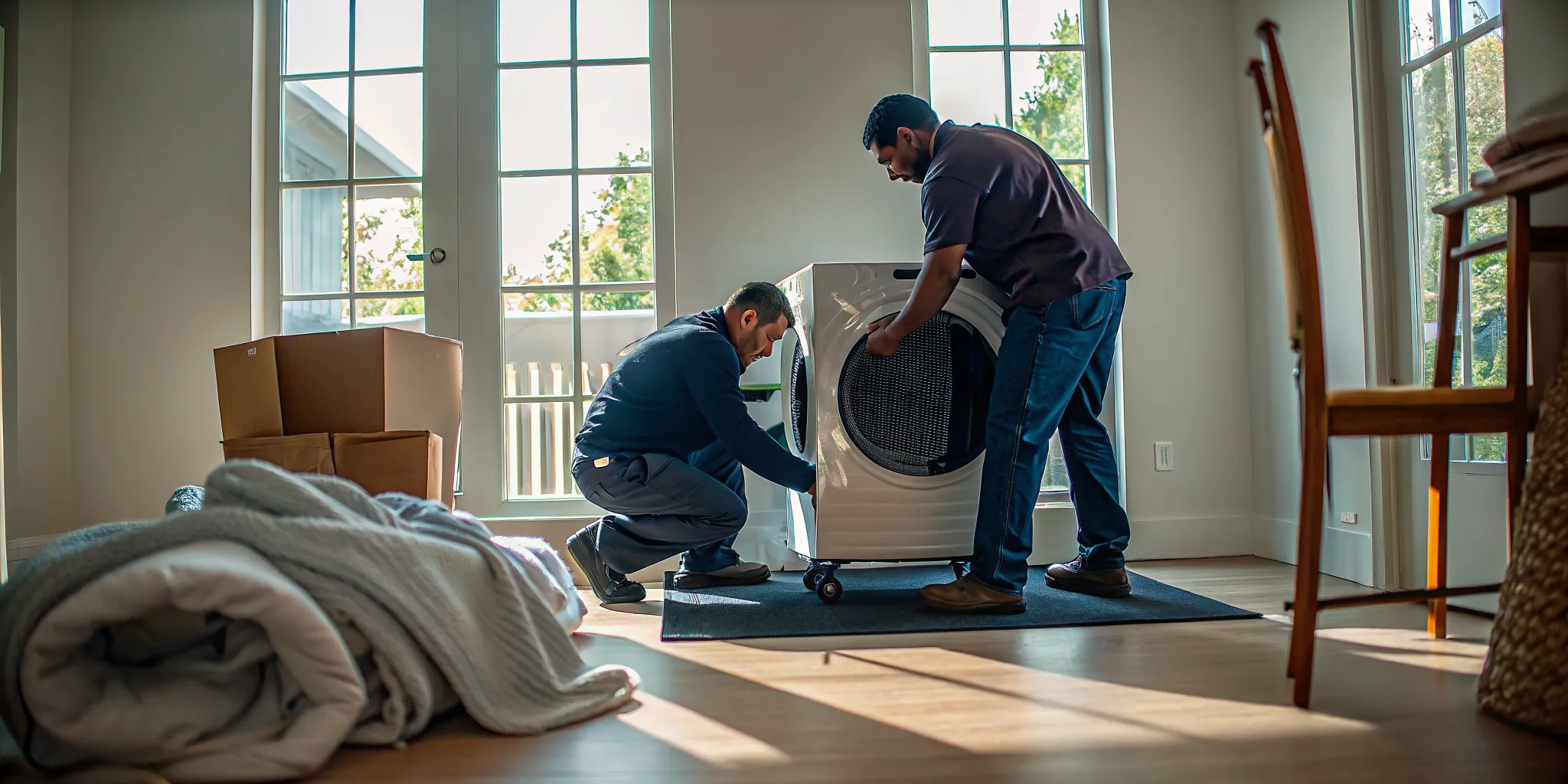
Remove glass shelves, bins, and drawers when the manual recommends it. Wrap them separately and label the box. If parts may remain inside, secure them so they cannot shift. Coil and secure the power cord, then protect the front and sides with a moving blanket.
Keep refrigerator doors closed with a moving strap or wrap. Do not place tape directly on the finish. Once the refrigerator is ready, measure it again with handles and hinges included in the route calculation.
Keep the refrigerator upright
Transport a refrigerator upright whenever its manufacturer requires it. Tilting or laying it down may allow compressor oil to move into the cooling lines. At the new home, place it in position and follow the manual’s waiting period before plugging it in.
Reconnect the water line only after checking the fitting and hose condition. Once connected, watch closely for leaks. Give the refrigerator time to reach a safe food-storage temperature before restocking it.
Preparing washers and dryers for the move
Laundry appliances combine weight with water, power, vents, and sometimes gas. Preparing them correctly prevents leaks and protects the washer drum from damage.
Shut off and drain the washing machine
Run the manufacturer’s cleaning or drain cycle if needed. Turn off both water valves, unplug the washer, and disconnect hoses only after placing towels and a shallow pan nearby. Water often remains in supply and drain hoses.
Inspect the hoses as you remove them. Worn, cracked, or bulging hoses should be replaced rather than moved to the new home. Drain, dry, label, and bag the hoses with the washer’s other parts.
Protect the washer drum
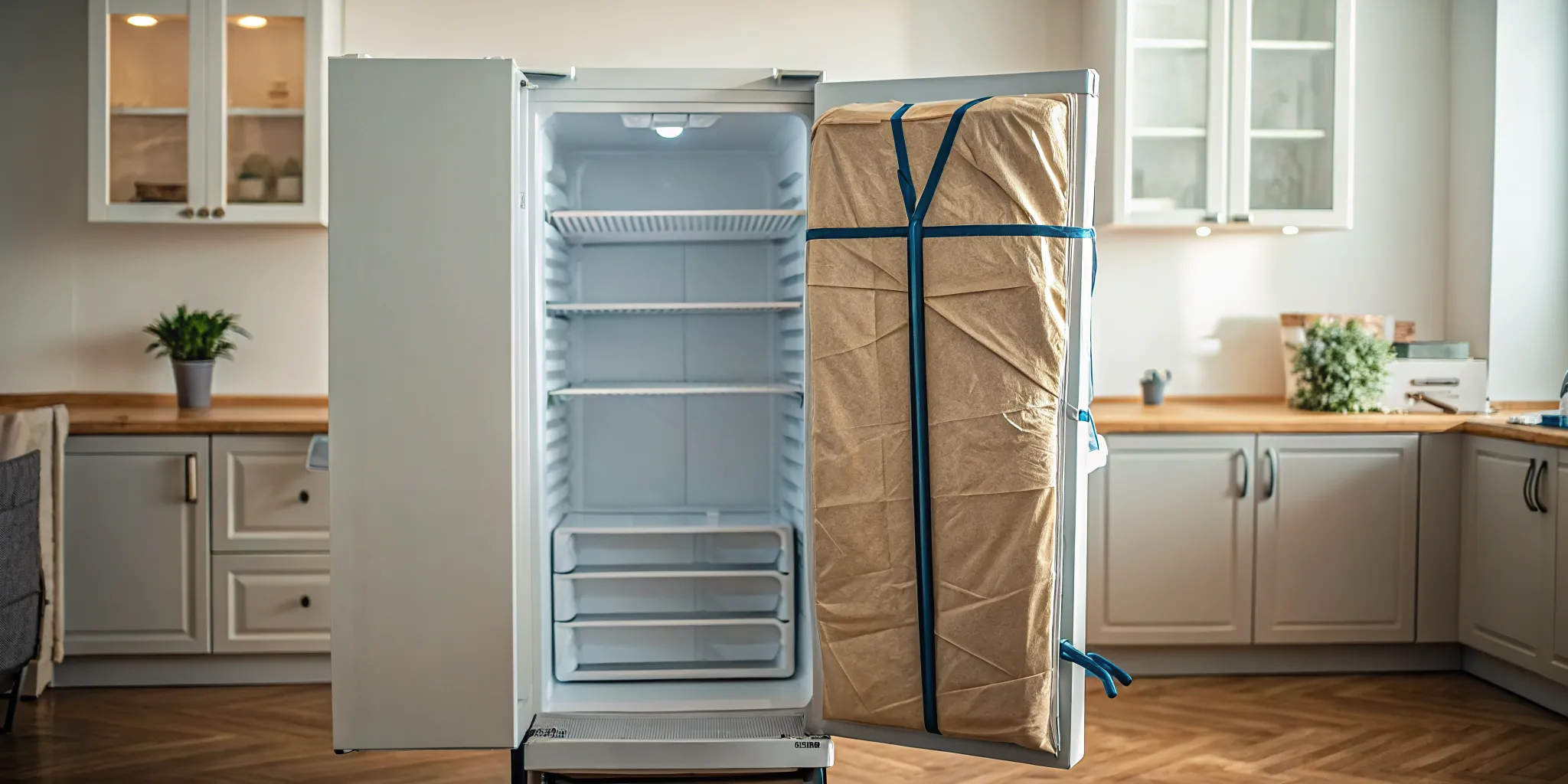
Many front-loading washers need shipping bolts or a transit kit to hold the drum during a move. Use the exact parts and steps specified for your model. Improvised blocks can damage the machine and may not protect the suspension.
Clean the detergent drawer, door seal, and filter as directed in the manual. Let the interior dry with the door open before securing it for transport. Keep the washer upright while moving it.
Prepare electric and gas dryers differently
For an electric dryer, unplug the power cord after confirming the appliance is off. Disconnect and clean the vent duct, then replace a crushed or damaged duct instead of reusing it. Secure the cord and protect the dryer’s finish.
A gas dryer requires a qualified professional to shut off, disconnect, cap, and later reconnect the gas line. Do not loosen a gas fitting yourself. If you smell gas at any point, leave the area and contact the gas utility or emergency services from a safe location.
Preparing dishwashers and ranges
Dishwashers and ranges are often built in or connected to more than one utility. This makes professional preparation especially important.
Dishwasher preparation
Run and empty the dishwasher, then let it cool. Turn off the correct breaker and water supply as directed. A built-in dishwasher may be hardwired, fastened to cabinets or a countertop, and connected to both a supply line and drain.
Have a qualified technician remove it when any part of that process is unclear. After disconnection, drain and dry hoses, remove racks or secure them, and tape small mounting hardware inside a labeled bag. Protect the door and controls with a moving blanket.
Electric range preparation
Remove racks, burner grates, pans, and other loose pieces. Clean grease and food residue before the move. If the range uses a standard plug, follow its manual for shutdown and disconnection. A hardwired range should be handled by a qualified electrician.
Do not lift by the oven door or handle. Secure the door without placing adhesive on the finish. Wrap glass cooktops with clean padding and keep heavy items away from them.
Gas range preparation
Arrange a qualified gas professional to disconnect and cap the line, then reconnect and test it at the new home. Movers should receive the range only after it has been safely disconnected and prepared.
Do not attempt to test a gas connection with a flame. If you are uncertain about a valve, line, fitting, or odor, stop work and contact the gas utility or a qualified technician.
Should you move large appliances yourself?
Some homeowners can complete basic cleaning, measuring, and packing tasks. The actual move becomes much harder when appliances are heavy, routes are narrow, or utilities require professional work.
| Factor | DIY move | Professional help |
|---|---|---|
| Utilities | Suitable only for simple, clearly understood preparation | Technicians can handle gas, hardwired, and complex utility work |
| Equipment | Requires correct rated dolly, straps, padding, and floor protection | Moving crews arrive with specialized handling equipment |
| Route | Best for wide, level paths without difficult stairs | Better for tight turns, stairs, elevators, and long carries |
| Risk | Homeowner assumes injury and property-damage risk | Trained crews use a planned team process |
Signs you should hire help
Hire professional help if you cannot safely control the load, lack the right equipment, or have stairs and tight turns. You should also hire the proper technician for gas, hardwired power, built-in appliances, leaking valves, or unclear connections.
Neatly Moving & Storage offers professional local moving services across Southern California. A moving crew can coordinate the handling plan while you arrange any required utility specialists.
What to confirm before moving day
Ask what preparation must be complete before the crew arrives. Confirm who handles appliance placement, whether transit bolts are required, and which utility tasks need a third-party technician. Clear expectations prevent delays on moving day.
Moving day and safe setup at your new home
A safe delivery starts with a clear route. Walk the path before moving each appliance, remove boxes and rugs, protect surfaces, and confirm that the destination has enough space and the correct connections.
Protect the route
Use suitable floor protection and padded corner guards. Keep children and pets away from the work zone. Make sure doors are held open and that no one walks under or beside an unstable load.
Communicate before every lift, turn, ramp, or stair. The person guiding the dolly should be able to see the path and call an immediate stop. Slow movement is safer than trying to power through a difficult turn.
Inspect before reconnecting
After placement, inspect the appliance, cords, hoses, and connections for damage. Follow the manual before restoring power or water. Have qualified professionals reconnect gas or hardwired appliances and test their work.
Watch water-connected appliances through their first use and check for leaks. Confirm that each appliance sits level and has the ventilation clearance required by its manufacturer.
Keep your move plan organized
Store manuals, photos, model numbers, and labeled hardware together. Photos taken before disconnection can help the appropriate technician understand the prior setup. For more planning details, review Neatly Moving & Storage’s moving FAQ.
Frequently asked questions
Can movers disconnect large appliances?
Policies differ, and gas or hardwired connections often require a qualified technician. Ask your mover what must be disconnected before arrival, then schedule the correct professional in advance.
Can you lay a refrigerator down to move it?
Keep it upright unless the manufacturer specifically permits another position. If it is tilted, follow the manual’s instructions and waiting period before plugging it in.
Do washing machines need transit bolts?
Many front-loading washers require model-specific transit bolts or a shipping kit. Check the owner manual and install the correct parts before the washer is moved.
How far ahead should appliances be prepared?
Start several days ahead for food use, technician scheduling, and route planning. Refrigerators and freezers also need enough time to defrost, drain, and dry before moving day.
What should I do if a shutoff valve will not turn?
Do not force it. A stuck or leaking valve can cause serious water or gas problems. Stop and call the appropriate plumber, gas professional, utility, or appliance technician.
Plan a safer appliance move
Large appliances are easier to move when every detail is planned before the truck arrives. Neatly Moving & Storage provides reliable local moving support with clear communication and transparent flat-rate pricing.
Request a free moving estimate and talk with the team about your appliances, access route, and moving-day needs.


