

Watching a thousand-dollar television slide off a moving ramp and shatter on the concrete is a devastating moment. Without the right protection, your moving company may only owe a small weight-based payment for that loss. Understanding moving insurance California options before moving day is the safest way to avoid a painful surprise.
Request a flat-rate moving quote from Neatly so you can review your protection options, packing needs, and move scope before booking.
For California moves, the phrase moving insurance usually refers to mover valuation, not a traditional insurance policy. The two core choices are released-value protection and full-value protection. Released value is basic and weight-based. Full-value protection can require repair, replacement, or a cash settlement, subject to rules and exclusions.
This guide explains what valuation means, how homeowners or renters insurance may fit in, how to document valuable items, and which questions to ask before hiring movers. It also connects those choices to Neatly’s process: trained crews, clear estimates, professional packing options, and transparent flat-rate pricing for Southern California moves.
Moving insurance California: what coverage really means
Moving insurance California searchers need one clear distinction: mover valuation is not the same as an insurance policy. Valuation defines the mover’s liability if an item is lost or damaged. Insurance is usually purchased separately from an insurer or may be partially included in a renters or homeowners policy.
Most people use the words moving insurance because they want a practical answer: who pays if something breaks? The legal answer is more specific. Licensed movers provide valuation coverage through the moving contract. That valuation determines how much the mover may be responsible for if a covered item is damaged, destroyed, or lost while under the mover’s care.
According to the Federal Motor Carrier Safety Administration, valuation coverage is not insurance. It is a tariff-based or contract-based liability framework. That matters because every plan has conditions. A claim can depend on how the item was packed, whether it was listed correctly. Whether it was already damaged, and whether the claim was filed before the deadline.
Why the distinction matters
If you assume valuation is the same as replacement insurance, you may choose too little protection. Basic coverage can be included at no extra charge, but it is usually limited to a small dollar amount based on weight. That can be a poor match for televisions, computers, artwork, mirrors, instruments, and designer furniture.
Actual insurance can come from a third-party moving insurance policy or from limited coverage under your current homeowners or renters policy. The California Attorney General recommends checking with your insurance provider before the move so you understand what is, and is not, protected in transit.
How Neatly handles the conversation
Neatly Moving & Storage keeps this topic straightforward. During the quote and planning process, our team can explain available moving insurance and protection options, identify fragile or high-value items, and help you decide whether professional packing is worth it. The goal is not to scare you into extra coverage. The goal is to make sure your protection level matches the real value and risk of your move.

Released value vs full-value protection
Released-value protection is the minimum, weight-based option. Full-value protection is broader and can require the mover to repair, replace, or pay current market value for covered items. The better choice depends on your inventory, item values, packing method, deductible, and tolerance for financial risk.
For many California customers, this is the most important choice in the moving contract. The cheapest option can be fine for simple, low-value moves. It can also be dangerously light if your home includes expensive electronics, artwork, antiques, collectibles, or custom furniture. Before you sign, compare the payout method instead of only comparing the upfront price.
Released-value protection
Released value is the basic level of protection. It is generally offered at no added cost, but the payout is low because it is based on weight rather than actual replacement cost. The common standard is 60 cents per pound per article. A 50-pound television could produce only a 30-dollar liability payment even if replacing it costs much more.
This option may be acceptable if you are moving mostly low-cost items, replacing old furniture, or transporting belongings you could comfortably replace yourself. It is less appropriate when a light item carries a high replacement value. Lamps, monitors, cameras, framed art, and small appliances are common examples.
Full-value protection
Full-value protection is designed to provide broader accountability. If a covered item is lost or damaged, the mover may repair it. Replace it with a similar item, or provide a cash settlement based on its current market value. That sounds simple, but the terms matter. Ask about deductibles, exclusions, maximum liability, and how depreciation is calculated.
Packing rules are especially important. Some fragile or valuable items may need professional packing to qualify for full protection. Neatly publishes guidance on items requiring specific packing for FVP so customers know which belongings need extra care before the crew arrives.
Supplemental insurance
Supplemental moving insurance is separate from mover valuation. You may buy it through a third-party insurer, or your existing insurance agent may offer a rider. This can be useful for rare art, jewelry, antiques, or collections where normal valuation limits are not enough. Always get policy terms in writing, including transit coverage, storage coverage, deductibles, exclusions, and claim deadlines.
| Option | How it works | Best for | What to confirm |
|---|---|---|---|
| Released value | Minimal liability based on item weight | Lower-value, lower-risk moves | The 60 cents per pound limit and claim rules |
| Full-value protection | Repair, replacement, or cash settlement for covered items | Homes with higher-value goods | Deductibles, exclusions, packing rules, and depreciation |
| Supplemental policy | Separate insurance from an insurer or agent | Art, antiques, collectibles, and added peace of mind | Transit limits, storage limits, and proof-of-value requirements |
Does homeowners or renters insurance cover a move?
Homeowners or renters insurance may cover some belongings away from home, but it often has limits for items in transit. Many policies do not cover accidental breakage caused by movers or self-packing. Call your insurer before moving day and ask for written clarification.
Your current policy can still matter. Some policies include off-premises personal property coverage, which may apply if items are stolen or damaged by certain covered events. The problem is that this coverage is often limited, and the deductible may be higher than the claim itself. It may also exclude common moving scenarios, such as a dropped box or a scratched table.
Before relying on a home policy, ask your agent direct questions. Does the policy cover belongings while they are inside a moving truck? Does it cover damage caused by professional movers? Are fragile items excluded? Is there a lower off-premises limit? Does coverage apply if items go into temporary storage? These answers can change the level of valuation or supplemental coverage you choose.
Deductibles and practical value
A policy can technically provide coverage and still be impractical. If your deductible is 1,000 dollars and the damage is worth 700 dollars, the policy will not help. If your claim involves several small items, you may decide the claim is not worth filing. This is why it is important to compare deductible amounts with your likely replacement costs.
Storage and long-distance moves
Long-distance moves and temporary storage add another layer. Neatly serves local Southern California moves and interstate relocations with dedicated coordinators and GPS tracking options. If your belongings will be stored before delivery, ask both your mover and your insurer whether the same protection applies in storage. Neatly’s storage services page explains how storage fits into the overall moving process.
How to document high-value items before moving day
The best documentation is created before loading starts. Make a high-value inventory, photograph every important item, record serial numbers, gather appraisals or receipts, and disclose valuable belongings in writing. Good records make claims faster and reduce disputes over condition, ownership, and value.
Documentation is not busywork. It is the evidence that connects an item to its pre-move condition and value. If a claim is needed later, clear documentation can show what the item looked like, how it worked, and what it was worth before the move. Without that proof, the process can become slower and more frustrating.
Build a high-value inventory
Start with the items you would not want to replace out of pocket. That list may include computers, televisions, musical instruments, exercise equipment, antiques, artwork, mirrors, designer furniture, collectibles, and family heirlooms. Include the brand, model, approximate age, purchase price, replacement value, and any existing scratches or defects.
Use photos, video, and receipts
Take photos from multiple angles in good light. For electronics, record a short video showing that the item powers on. Photograph serial numbers and model numbers. Save receipts, appraisals, certificates, or online replacement listings in one digital folder. If you are moving high-value art, jewelry, or antiques, consider a professional appraisal before moving day.
Follow packing rules
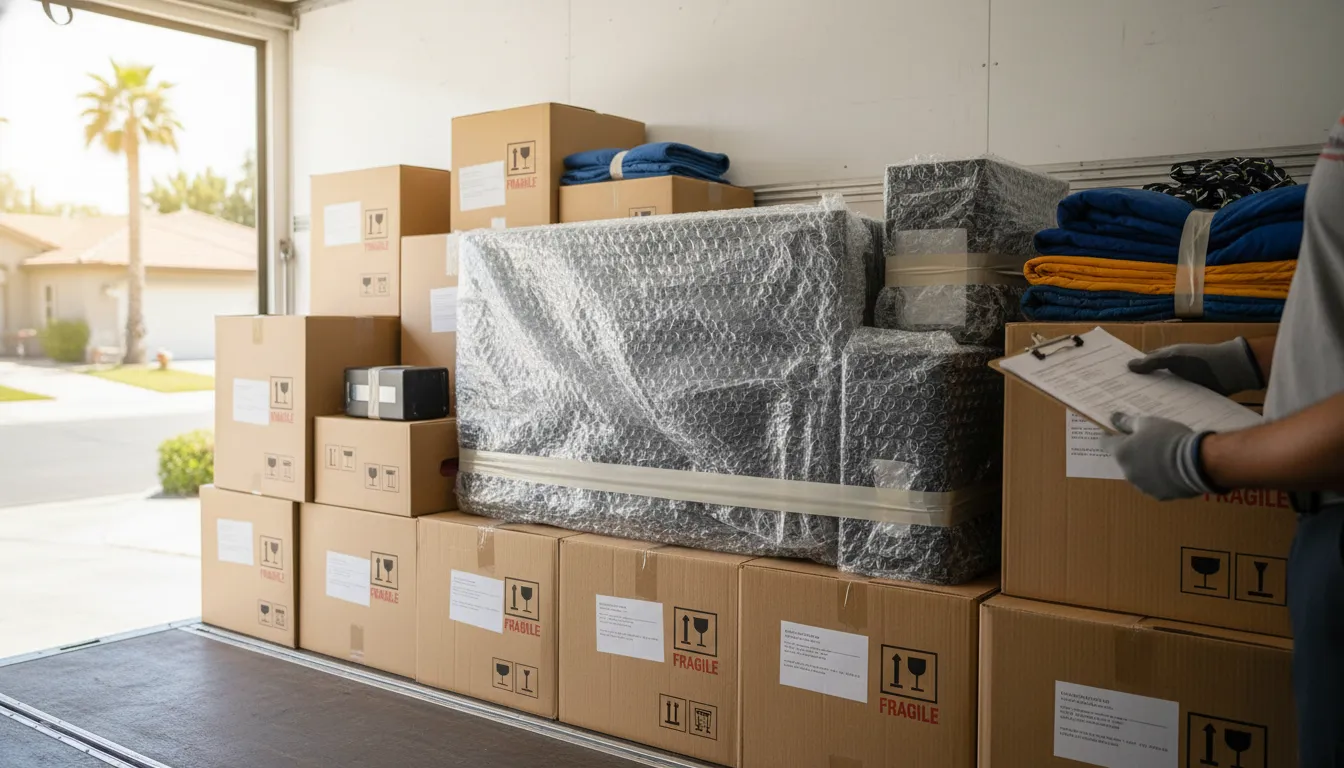
Protection can depend on packing. If a fragile item is packed in an unmarked box with loose newspaper, a claim may be harder to support. Neatly offers full-service and partial packing options, including professional materials and trained crews. If you plan to self-pack, read Neatly’s guidance on packing fragile items and ask whether any items require professional preparation to remain covered.
- Create a high-value list. Put every important item in one inventory with estimated value and condition notes.
- Photograph each item. Capture wide shots, close-ups, serial numbers, and any existing damage.
- Save proof of value. Keep receipts, appraisals, purchase records, or replacement listings.
- Confirm packing requirements. Ask whether fragile or high-value items must be professionally packed.
- Disclose items in writing. Give the mover written notice before loading begins.
- Keep records with you. Do not pack your inventory folder inside the moving truck.
What should you ask movers about protection?
Ask every mover the same protection questions before comparing prices. Confirm licensing, valuation choices, claim deadlines, deductibles, exclusions, packing rules, high-value item procedures, and whether the estimate is binding in writing. A low quote is not useful if the risk details are vague.
The best time to ask about protection is before you book. A reputable mover should be able to explain coverage without pressure or confusion. If a company brushes off the topic, refuses to provide terms in writing, or tells you everything is covered without explaining limits, treat that as a warning sign.
Questions about valuation and claims
- What is included at no extra charge?
- Do you offer full-value protection?
- What deductible applies?
- Are there excluded items or excluded types of damage?
- How long do I have to file a claim?
- Do I need proof of value for high-value items?
Questions about packing
Ask whether self-packed boxes are covered. Many movers limit liability for boxes they did not pack because they cannot verify the condition or packing quality inside the box. This does not mean you cannot pack yourself. It means you should know which items are safe to self-pack and which items deserve professional materials, crates, or specialty handling.
Questions about the company
Protection is only as good as the company behind it. Ask whether the mover is licensed, insured, and operating as a direct mover instead of only a broker. Neatly is a professional Southern California moving company with full-time trained crews, flat-rate quote options, and local, long-distance, storage, packing, and junk removal services. If you are still comparing companies, use Neatly’s guide on how to choose a moving company in Los Angeles.
You can also review common moving questions on the Neatly FAQ page, including service areas, packing options, estimates, storage, and long-distance timing. A good moving partner should make the process feel clearer, not more complicated.
How coverage choices affect your total moving risk
Your coverage choice affects more than a claim form. It changes your real financial exposure if something goes wrong. Basic protection keeps upfront cost low, but it can leave expensive items underprotected. Better documentation, professional packing, and clearer estimates reduce avoidable risk.
Moving risk has two sides: damage risk and pricing risk. Protection options help with damage risk. Transparent estimates help with pricing risk. A move can still feel stressful if the coverage is clear but the final bill changes without warning. That is why Neatly’s brand promise centers on flat-rate moving, no surprises, and no stress.
The real cost of basic protection
Basic released-value protection is not wrong. It is simply limited. If your belongings are modest in value and your move is simple, you may decide the lower protection level is acceptable. If your shipment includes high-value items, the possible payout may not match your exposure. That gap is the real cost.
Why packing quality matters
Professional packing can lower the chance of damage and improve claim clarity. Neatly uses trained employees, not day laborers, and offers full-service or partial packing. That matters for fragile kitchenware, mirrors, framed art, electronics, lamps, and items that need special materials. The fewer shortcuts taken before loading, the fewer problems you need to solve after delivery.
Why clear quotes matter too
California consumers should also protect themselves from surprise pricing. Request written estimates, compare scope, and ask what is included. Neatly offers hourly and binding flat-rate options for local moves, binding quotes for long-distance planning, and virtual or in-home estimates. If your move involves storage, packing, stairs, long carries, or specialty items, put those details into the estimate before moving day.
Frequently Asked Questions
What are the minimum moving insurance requirements for California movers?
Licensed California movers must offer basic released-value protection. This minimum valuation usually limits mover liability to 60 cents per pound per article. It is not the same as replacement-value insurance, so customers with valuable belongings should ask about full-value protection or supplemental coverage.
Do I need separate moving insurance if I have renters insurance?
You may still need separate protection. Renters or homeowners insurance can provide limited off-premises coverage, but many policies exclude accidental damage caused during loading, transit, or unloading. Call your insurance agent before moving day and compare that answer with the mover’s valuation options.
What should I ask my California mover about insurance coverage?
Ask whether the company offers released-value protection, full-value protection, or third-party insurance. Also ask what deductibles, exclusions, and claim deadlines apply; whether professional packing is required for fragile items; and how high-value items must be documented before loading.
Is moving insurance worth the cost for a California move?
Extra protection is often worth considering when the replacement cost of your belongings is higher than basic weight-based valuation. It is especially useful for electronics, art, antiques, designer furniture, instruments, and long-distance moves where items spend more time in transit.
Ready to secure your upcoming California move?
Neatly Moving & Storage helps Southern California families move with clear pricing, professional crews, and straightforward protection conversations. Whether you are moving across Los Angeles, Orange County, Ventura County, Riverside County. Or out of state, our team can help you plan the right scope and protection level.
Request your flat-rate quote online or call (818) 452-2099 to talk through your move, inventory, packing needs, and valuation options.


